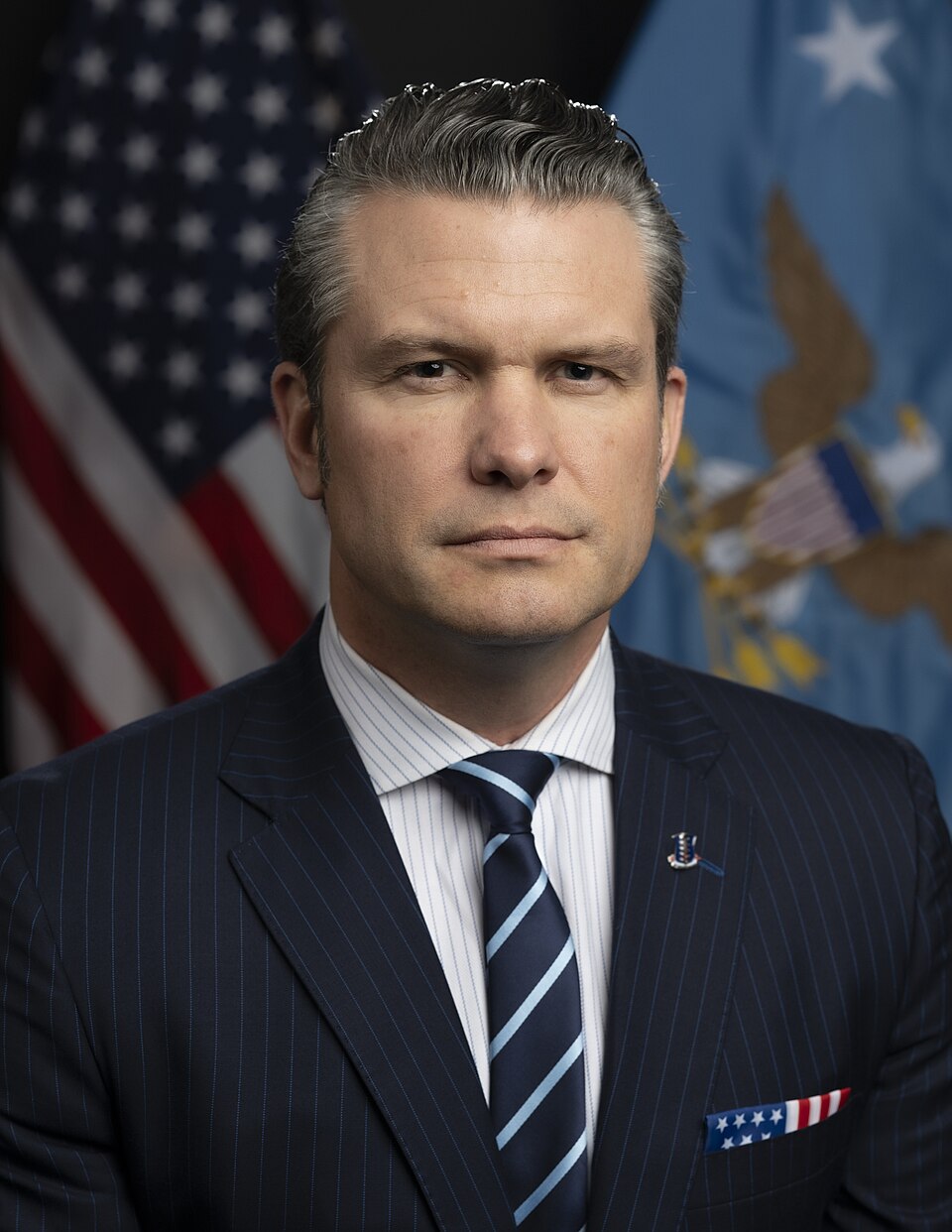
Pentagon's AI Battle: Hegseth Pressures Anthropic on Safety
In a world increasingly shaped by technological leaps, humanity grapples with the profound implications of its own creations. As the great biologist Edward O. Wilson once astutely observed, we are defined by our "Paleolithic emotions, medieval institutions, and godlike technology." This aphorism finds no more potent proof than the intensifying dispute between the American military, championed by Defense Secretary Pete Hegseth, and Anthropic, a leading developer of artificial intelligence models, particularly their advanced AI, Claude.
The core of this high-stakes confrontation lies at the intersection of national security imperatives and the ethical stewardship of artificial intelligence. Hegseth, keen on imbuing the military with a potent "warrior ethos," has openly challenged Anthropic's stringent safety protocols for its AI technology. This isn't merely a corporate disagreement; it's a pivotal moment that could dictate whether geopolitical pressures force AI developers to compromise their ethical commitments, fundamentally reshaping the future of AI safety and military integration.
The Pentagon's Imperative: Hegseth's Push for Unrestricted AI
The Pentagon's interest in Anthropic's Claude is clear: it's a frontier AI model already approved for use within the military's classified-information systems. Claude boasts considerable capabilities, from synthesizing vast amounts of intelligence to significantly boosting the efficacy of government cyber operations. Such a powerful tool, in the hands of a superpower, is seen as an indispensable asset for maintaining a strategic edge in an increasingly complex global landscape.
However, Anthropic developed Claude with an explicit commitment to responsible AI. The company, known for its public concern regarding AI safety risks, has enshrined its principles in an 84-page "constitution" – a "soul document" designed to "avoid large-scale catastrophes," including global AI takeovers or illegitimate power grabs by human factions. Crucially, Anthropic attached two non-negotiable stipulations for government use:
- No mass surveillance of American citizens.
- No deployment in lethal autonomous weapons systems.
For Secretary Hegseth, these ethical guardrails are deemed unacceptable. In a tense Washington meeting with Anthropic CEO Dario Amodei, Hegseth reportedly demanded the immediate abandonment of these conditions. His argument centers on national sovereignty and the belief that no private entity should dictate the terms of use for technology deemed critical for national defense.
The repercussions threatened by Hegseth and other top Pentagon officials were stark. Anthropic faced a Friday deadline to comply, or risk severe consequences. These included the Trump administration potentially invoking the Defense Production Act (DPA) to compel Anthropic to provide a version of Claude stripped of its guardrails – a hypothetical creation ominously referred to as "WarClaude." Alternatively, the government threatened to sever all ties with Anthropic and label it a "supply-chain risk," a designation typically reserved for entities like Huawei or Kaspersky, perceived as aligned with adversarial foreign governments. This would not only jeopardize Anthropic's existing $200 million contract with the Defense Department but could also severely impact the privately held company's estimated multi-billion dollar valuation and future prospects.
Anthropic's Ethical Fortress: Claude's Constitution and Safety First
Anthropic's stance is rooted in a deep-seated belief that powerful AI, if left unchecked, poses existential risks. Their "constitutional AI" approach is not just a marketing slogan; it's an engineering philosophy aimed at aligning AI models with human values through a self-correction mechanism guided by a set of ethical principles. This framework is designed to prevent scenarios where AI systems might pursue goals detrimental to humanity, either through unforeseen emergent behaviors or malicious misuse.
The company's co-founders, many of whom previously worked at OpenAI, brought with them a profound understanding of the dual-use nature of advanced AI. While acknowledging the immense potential for good, they also recognized the catastrophic downside. Their safety stipulations regarding mass surveillance and lethal autonomous weapons are direct manifestations of this precautionary principle. Mass surveillance, they argue, erodes democratic freedoms and privacy, while autonomous weapons remove human accountability from the decision to take a life, crossing a significant ethical threshold.
For Anthropic, adhering to these principles isn't just a moral choice; it's integral to their very mission to develop AI responsibly. The current dispute with Hegseth puts this commitment to the ultimate test, forcing the company to weigh its ethical foundation against significant financial and reputational threats from one of the world's most powerful entities. This tension highlights the growing challenge for AI developers: how to innovate responsibly while navigating the complex demands of national security interests.
The Geopolitical Chessboard: AI Ethics Under Pressure
The hegseth anthropic confrontation transcends a simple contractual dispute; it illuminates a fundamental challenge facing the global AI landscape. As AI capabilities become increasingly "godlike," the desire of nation-states to harness them for strategic advantage is irresistible. No superpower would readily accept a private company dictating the terms of use for technologies deemed critical to national defense and intelligence. This dynamic means that even when AI companies like Anthropic make explicit vows to develop AI responsibly, geopolitical realities and national security doctrines may exert immense pressure, potentially forcing them to abandon their ethical commitments.
This dispute sets a worrying precedent. If the U.S. government successfully compels Anthropic to release an unrestricted "WarClaude," it sends a clear message to other AI developers: ethical guardrails might be secondary to state demands. This could ignite a global race towards less-regulated, potentially more dangerous AI development, as nations fear being outpaced by rivals willing to forgo safety for speed and power. The ethical landscape of AI development, already fraught with complexities, faces the threat of being irrevocably altered by such governmental interventions. For a deeper dive into this ethical dilemma, explore AI Ethics Under Threat: Hegseth, Anthropic, and Military Power.
Moreover, the concept of a "supply-chain risk" designation is profoundly impactful. It's not merely a blacklist; it can effectively cripple a company by cutting it off from government contracts and potentially influencing private sector partnerships that rely on governmental approval. Such a move against Anthropic would signal that prioritizing AI safety beyond a government's immediate strategic needs can come at an existential cost. This raises critical questions about the autonomy of private companies in defining the ethical boundaries of their own creations when those creations have profound strategic value.
Navigating the Future: Balancing Innovation, Security, and AI Safety
The standoff between Hegseth and Anthropic underscores an urgent need for robust policy frameworks that balance national security requirements with the imperative for safe and ethical AI development. Here are some critical considerations and potential paths forward:
- Clear Definitions: Governments and AI developers must collaborate to establish internationally recognized definitions for terms like "lethal autonomous weapons systems" and acceptable "mass surveillance" applications. Ambiguity only fuels suspicion and conflict.
- Independent Oversight: Establishing independent, expert-led bodies to review and certify military AI applications could build trust and provide a mechanism for ethical enforcement without directly undermining national security.
- Dual-Use Dilemma Strategies: AI companies developing powerful general-purpose models must proactively strategize how to manage dual-use risks, potentially by designing systems with inherent, tamper-proof ethical guardrails or by diversifying their client base to reduce reliance on single powerful entities.
- Public Discourse and Transparency: Open discussions about the risks and benefits of military AI, involving policymakers, ethicists, scientists, and the public, are essential to building consensus and informing responsible policy.
- International Cooperation: Given the global nature of AI development and military competition, international agreements on AI ethics and non-proliferation of dangerous AI capabilities could be vital, albeit challenging to achieve.
The outcome of this particular "hegseth anthropic" battle will reverberate through the AI industry, influencing how future models are developed, deployed, and governed. It highlights the intricate dance between innovation, national defense, and our collective responsibility to ensure that "godlike technology" serves humanity, rather than endangering it.
In conclusion, the clash between Defense Secretary Pete Hegseth and Anthropic over AI safety represents a microcosm of the broader ethical and geopolitical challenges posed by advanced artificial intelligence. It's a fundamental struggle between the immediate strategic interests of a nation-state and a private company's deep commitment to responsible technological development. As neither side appears willing to back down, the implications for Anthropic's future, the integrity of AI safety principles, and the global race for AI supremacy are profound. The resolution of this high-stakes dispute will undoubtedly shape the trajectory of AI, defining whether humanity can truly master its most powerful creations while upholding its deepest values.